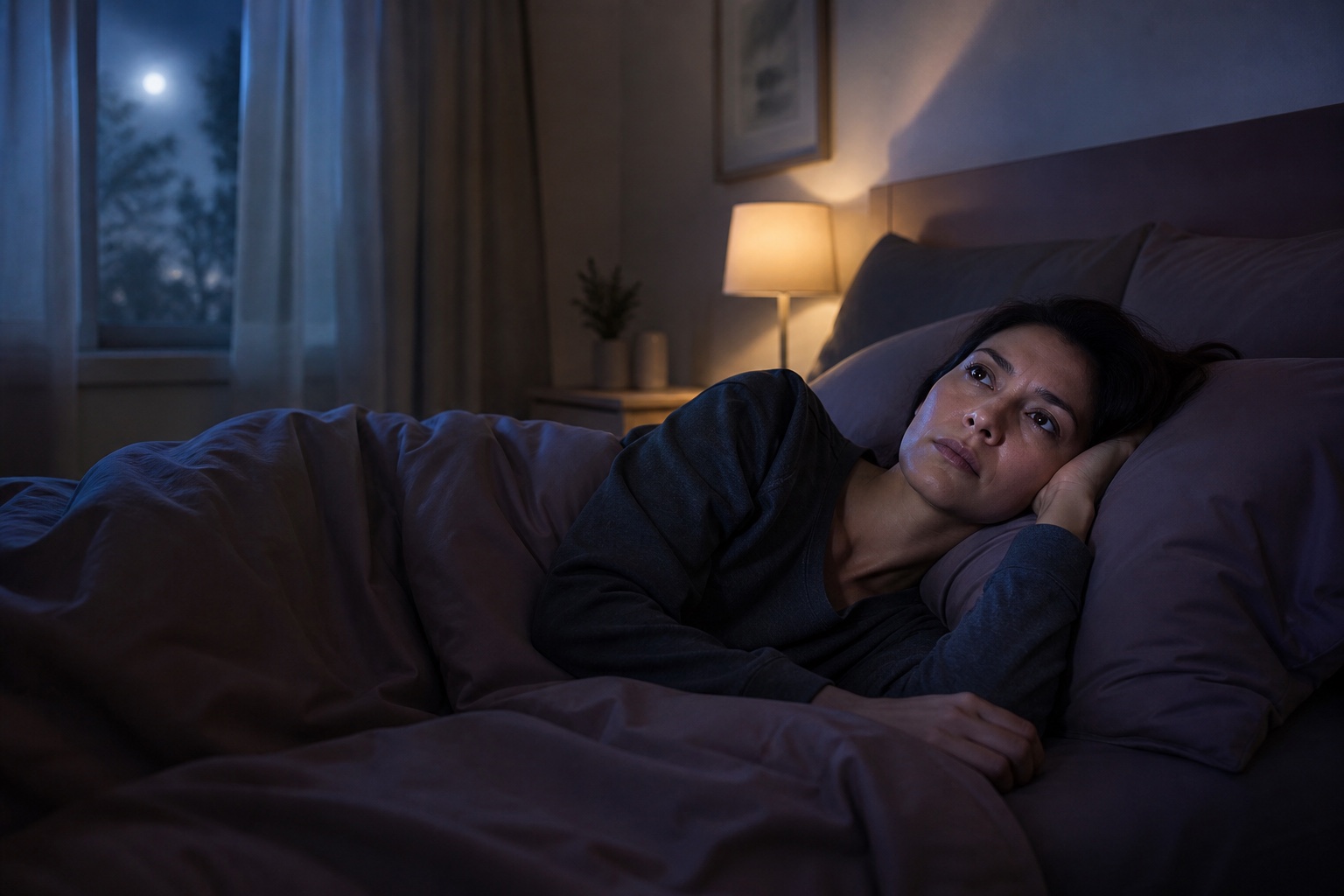
After an incredibly long day, your head finally touches the pillow. The moment you've been waiting for!
Your body is exhausted. The house is quiet. But the silence you craved all day suddenly feels uncomfortable. Without the usual distractions, your mind starts replaying the argument, the diagnosis, the accident, the loss, or whatever else turned your world upside down.
If this sounds familiar, you're not losing your mind. You're not failing. Your nervous system is doing something it learned thousands of years ago: staying awake when it believes danger may still be nearby.
Why Do Difficult Thoughts Show Up at Night?
Do you think a gazelle goes to sleep when it knows a lion is lurking nearby?
I ask my clients this question often when we talk about trauma and sleep. The usual response is, “Well, no... but I'm not in danger.”
And they're right. There's no lion in the bedroom. The problem is that our nervous system doesn't always easily distinguish between a threat happening right now and an experience that has already ended but hasn't been fully processed.
To sleep, the nervous system needs to sense enough safety to lower its guard. The gazelle isn't consciously deciding to stay awake. Its body knows that falling asleep while a predator is nearby could cost it its life. Staying alert is a survival response.
After a traumatic experience—or an extended period of intense stress—the brain systems responsible for detecting potential threats can become more reactive. The amygdala begins behaving like an overly sensitive fire alarm, quickly detecting danger even after the threat has passed. At the same time, the prefrontal cortex, which helps evaluate the situation and regulate that alarm, may have a harder time taking back control.
It's as if the amygdala grabbed the steering wheel while the prefrontal cortex temporarily moved into the passenger seat.
That's why you can feel tired but wired: physically exhausted, yet completely alert. You're not choosing to stay awake. Your nervous system is trying to protect you from something that already happened but still feels like a possible threat.
Stress and Trauma Aren't the Same Thing
Certain words take off on social media and eventually get used to describe almost any unpleasant experience. Trauma is one of them.
I understand why. For many people, finding this word helps them name symptoms they didn't understand and recognize the seriousness of what they're feeling. Still, not everything difficult, painful, or stressful is necessarily traumatic. Making that distinction doesn't minimize anyone's experience. It helps us better understand what's happening and what kind of support might help.
So, what is stress?
Stress is your body's response to a demand: an overwhelming workload, a move, financial strain, a difficult conversation, or one of those weeks when everything seems to happen at once.
It can be extremely uncomfortable, but it's usually connected to an identifiable situation. When the problem is resolved—or when you adapt to the new circumstances—the stress response tends to decrease. You might sleep poorly for a few days or weeks, but your sleep will often recover once the pressure lifts.
Trauma is different. The American Psychological Association describes trauma as a disturbing experience that produces fear, helplessness, confusion, or other reactions intense enough to have a lasting effect on a person's functioning. It may be connected to a threat to your safety, violence, a serious accident, a sudden loss, or another experience that left you feeling deeply powerless or out of control.
Whether an experience leaves lasting traumatic stress depends on much more than the event itself. The severity and duration of what happened matter, but so do what came before it and what happens afterward: previous experiences, ongoing stress, the support available to you, access to practical resources, and whether you believe you have what you need to cope.
According to the World Health Organization, about 5.6% of people exposed to a potentially traumatic event develop post-traumatic stress disorder, although the rate varies significantly depending on the type of experience and is much higher after events such as war and sexual violence. PTSD is only one possible response to trauma, however. You can experience very real and painful effects—including disrupted sleep—without meeting the criteria for PTSD.
This isn't a measure of strength. Two people can live through similar events and respond very differently because they didn't experience them with the same history, support, safety, or resources.
When an experience leaves the nervous system waiting for danger to return, the alert response may continue even when the threat has logically ended. That's why trauma-related sleep difficulties can persist and may not respond fully to the usual sleep-hygiene advice.
A cooler room, less screen time, or a better bedtime routine may help, but they might not be enough. Your nervous system isn't just waiting for a more comfortable pillow. It's looking for repeated signals that it's safe to lower its guard.
What About Chronic Stress?
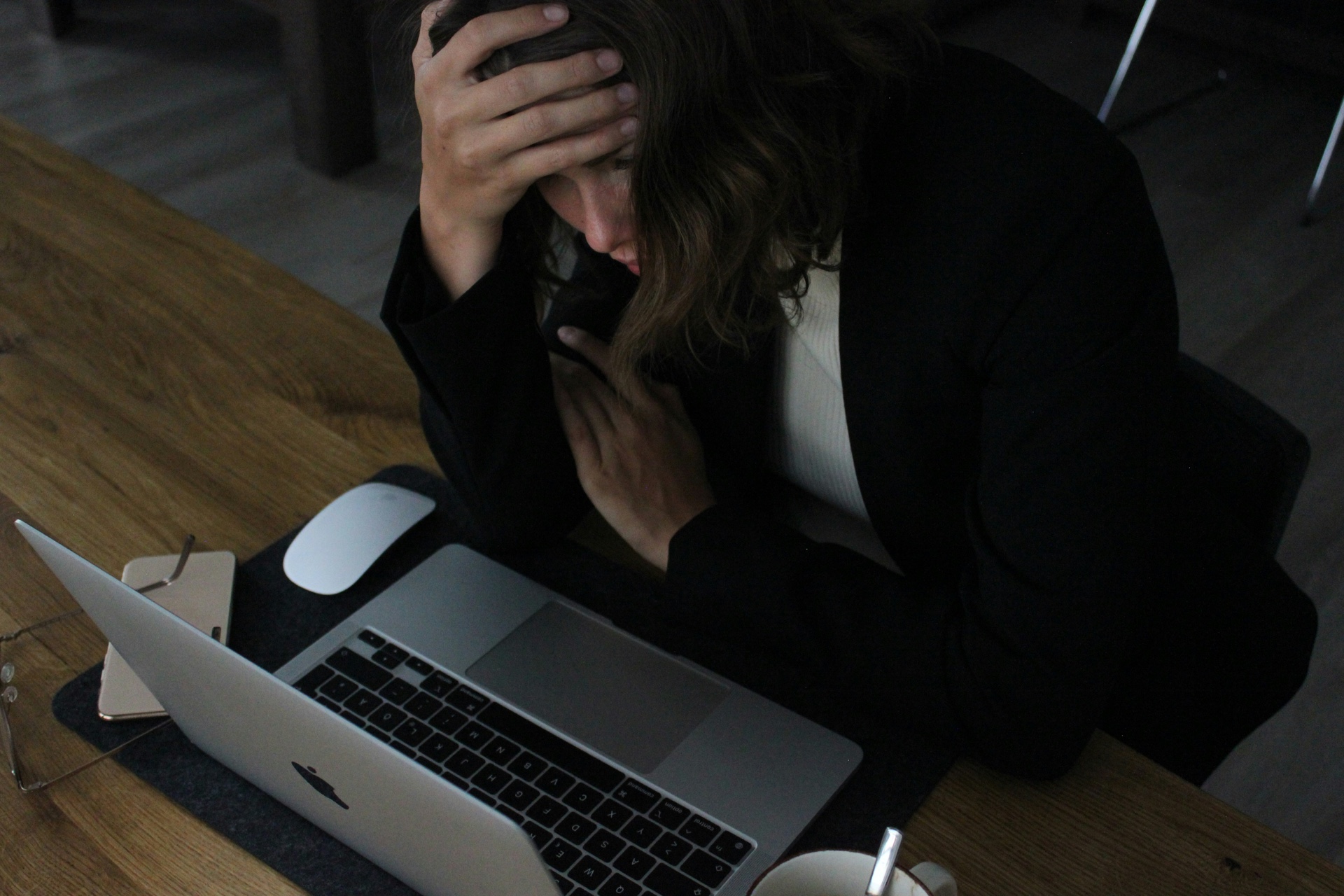
There's a third category that often gets left out of this conversation.
Chronic stress develops when demands don't go away, or when one follows another without giving you enough time to recover. It might come from caring for a sick relative, living with financial insecurity, working in a hostile environment, experiencing discrimination, navigating immigration, or carrying responsibilities that never seem to end.
There isn't necessarily one traumatic event. Instead, there may be an accumulation of circumstances that keeps your body responding as though there's always something urgent to solve.
Think about what happens when you hold down a car's accelerator for too long. The engine may handle it for a while, but it wasn't designed to run that way indefinitely. In a similar way, repeated exposure to stress can make it difficult for the body's alert system to return fully to its resting level.
During the day, this might feel like irritability, muscle tension, difficulty concentrating, or the sense that you never completely relax. At night, it can show up as racing thoughts, lighter sleep, frequent awakenings, or that incredibly frustrating combination of being exhausted while your mind remains completely switched on.
Stress and sleep can also create a pretty unfair cycle:
- Stress makes it harder to sleep.
- Poor sleep reduces your ability to cope with the next day's demands.
- Those demands feel even more overwhelming.
- Your nervous system receives even more reasons to remain alert at night.
Over time, your bed can also become associated with worry, frustration, and effort. What started as an understandable response to stress may turn into a pattern that continues even after some circumstances have improved.
This doesn't mean that chronic stress automatically becomes trauma. However, when it continues to interfere with your rest, it can contribute to the development of a sleep disorder.
Sometimes stress starts the bad nights, but certain thoughts and behaviors keep them going even after life begins to settle down. You can learn more about that process in the article on the 3P Model and how insomnia develops.
Everything Is “Fine” During the Day... Until You Turn Off the Light
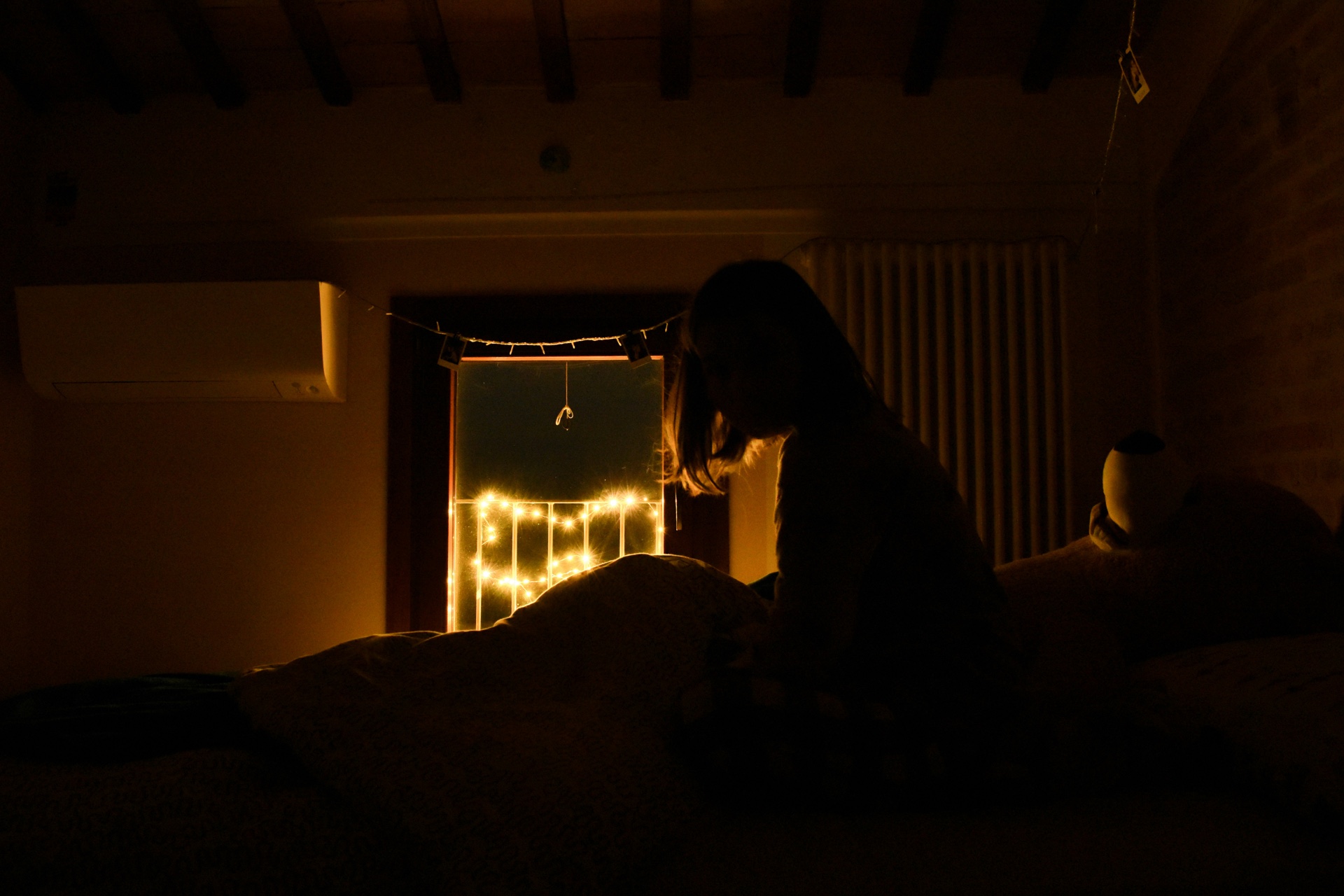
For many people, the problem isn't that their body has forgotten how to sleep. The problem is what happens when the distractions of the day disappear.
You replay a conversation word for word.
You imagine everything that could go wrong tomorrow.
You mentally draft an email you'll probably never send.
You remember something that happened years ago, and suddenly your body reacts as if it's happening ALL OVER AGAIN.
During the day, work, responsibilities, conversations, and your phone can keep these thoughts in the background. But once you're lying in the dark, the noise that was covering them disappears. Now they finally have the microphone.
This isn't a lack of willpower. You're not overthinking because you want to. Your mind is trying to process, prevent, or solve something during the first quiet moment it has found.
The problem is that 11 p.m. usually isn't the best time to solve your entire life.
Stress, Anxiety, and Trauma: Cousins, Not Twins
Just as we confuse stress with trauma, we also tend to use stress and anxiety as though they mean exactly the same thing.
Stress is usually related to a specific cause: a deadline, a conflict, an important decision, or a major life change. It generally decreases when the situation is resolved or you adjust to it.
Anxiety can continue even after the original problem is gone. It may appear as constant worry, a persistent sense of threat, fear that something bad is about to happen, or the need to monitor and anticipate everything (especially at night, when anxiety feels much worse without daytime distractions).
Trauma-related sleep difficulties can share features of both. An experience—or series of experiences—activated the alarm, but the alert state continued afterward.
Distinguishing between them isn't merely an exercise in vocabulary. What started the problem and what continues to maintain it can influence which kind of treatment will be most helpful.
So, What Do I Do When My Nervous System Won't Turn Off the Light?
The internet is full of well-intentioned remedies. Warm milk is the old standby.
If you enjoy it and it's part of a comforting routine, there's nothing wrong with having it. The ritual itself may feel soothing. But no drink can single-handedly persuade an alert nervous system that the danger is over.
Here are a few places to begin.
1. Bring Yourself Back to Where You Are
Grounding techniques use your senses to remind your body that you're here, in the present, rather than inside the event you fear or remember.
You can try:
- Naming five things you can see, four you can touch, three you can hear, two you can smell, and one you can taste.
- Pressing your feet into the floor and noticing the sensation of your body's weight.
- Slowly describing where you are: “I'm in my bedroom. The door is closed. I can hear the fan. I'm safe in this moment.”
- Breathing without forcing it and allowing your exhale to last slightly longer than your inhale.
The goal isn't to force yourself to feel calm immediately. It's to give your nervous system information about the present moment. If closing your eyes or focusing on your breathing makes you more anxious, keep your eyes open and choose an external anchor, such as an object, a sound, or the feeling of your feet against the floor.
2. Create a Wind-Down Routine
You can't always go directly from answering emails, caring for other people, consuming the news, or handling emergencies to sleeping deeply five minutes later.
Set aside 30 to 60 minutes before bed for calming activities that help your nervous system feel safe and ready for sleep. It doesn't have to be a perfect routine worthy of a wellness video. It might be as simple as dimming the lights, changing your clothes, listening to something calming, or doing a repetitive activity that doesn't demand too much from you.
This routine creates a transition between “problem-solving mode” and “rest mode.”
3. Name the Thought and Leave It for Tomorrow
Keep a notebook beside your bed. When a persistent thought appears, write it down in one brief sentence. You don't need to analyze it or find a solution. The idea is to tell your brain, “This is written down. I don't need to keep holding it tonight.”
You can also set aside time earlier in the day to review worries, tasks, or decisions. That way, your bed doesn't become your mind's overnight office.
4. Look for Repetition, Not Perfection
A nervous system that has spent a long time on alert probably won't change after one night of deep breathing. It needs repeated experiences that teach it nighttime can be predictable and safe.
Consistency is usually more helpful than putting in enormous effort for one night. You don't need to perform a perfect routine. You need steady enough signals, repeated with patience.
Stop Checking the Clock—Yes, That Counts Too

There's one small behavior that deserves its own section because it's so common: checking the time whenever you wake up.
3:47 a.m. Then 4:15. Then 4:52. (If this sounds familiar, read more about why we wake up at 3 AM and how cortisol plays a role).
Every glance hands your brain a math problem: “If I fall asleep this exact second, I can still get three hours and eight minutes.” It also tells an already-alert nervous system that something important must be monitored. Neither one helps you sleep.
The clock isn't the enemy. Repeatedly checking it is what keeps the cycle active.
Before bed, turn the clock toward the wall or leave your phone out of reach. If you need an alarm, keep it set without making the time visible. You don't need to do calculations in the middle of the night. You need to give your mind one less thing to grab onto.
If you wake up and feel the urge to check the time, return to one of the grounding techniques we discussed earlier.
When Is It Time to Get Help?
A few difficult nights after a stressful week are part of being human. But if your sleep problems have continued for weeks or months, interfere with your ability to function during the day, or began after a traumatic experience, it may be time to speak with a professional.
Not because there's something wrong with you. Not because you've failed to learn how to sleep. And definitely not because you need to try harder.
A professional experienced in trauma therapy can help you understand why your nervous system remains on alert. Depending on your needs, evidence-based approaches such as Cognitive Processing Therapy (CPT) or Cognitive Behavioral Therapy (CBT) may help address the responses, emotions, and beliefs connected to trauma, stress, or anxiety.
If persistent insomnia is also present, Cognitive Behavioral Therapy for Insomnia (CBT-I) can address the thoughts and behaviors maintaining the sleep problem.
Treating trauma, stress, or anxiety alone doesn't always undo the insomnia patterns the brain has learned over time. In the same way, focusing only on sleep may leave the alert state that continues to fuel the problem unaddressed. When both are present, working on the emotional source and the insomnia together can offer a more complete way out of the cycle.
Your body isn't sabotaging your rest. It's trying to finish a conversation that began when things became difficult. With the right support, it can learn that it doesn't need to continue that conversation every night.
That support should meet you as you are. You shouldn't have to translate your identity, language, or experience into something more familiar just to be understood and helped. Whether that support happens in English or Spanish, the goal is the same: helping your nervous system feel safe enough to rest again.
🌙 Stuck in Hyperarousal After Stress or Trauma?
Calm your alert system and restore deep sleep with evidence-based therapy.
We provide bilingual trauma-informed care (including CPT) and gold-standard CBT-I for insomnia so your brain and body can finally feel safe enough to rest. Virtual sessions across Maryland in English and Spanish.
Schedule a Free 15-Minute Consultation →If You're a Healthcare Provider
Providing trauma-informed care for insomnia means recognizing that apparent “poor sleep hygiene” may be a consequence of the problem rather than its underlying cause.
When treatment focuses exclusively on changing nighttime behaviors without assessing hypervigilance, trauma responses, chronic stress, anxiety, and the person's current conditions of safety, it may fall short. Care should combine evidence-based strategies for insomnia with a thoughtful understanding of the person's circumstances and the nervous system's ongoing state of alert.
References
- American Psychological Association. Trauma.
- World Health Organization. Post-traumatic stress disorder. 2024.
- U.S. Department of Veterans Affairs, National Center for PTSD. Effects of Disaster Events: Resilience and Risk Factors.
- Kalmbach DA, et al. Hyperarousal and sleep reactivity in insomnia: current insights. Nature and Science of Sleep. 2018;10:193–201.
