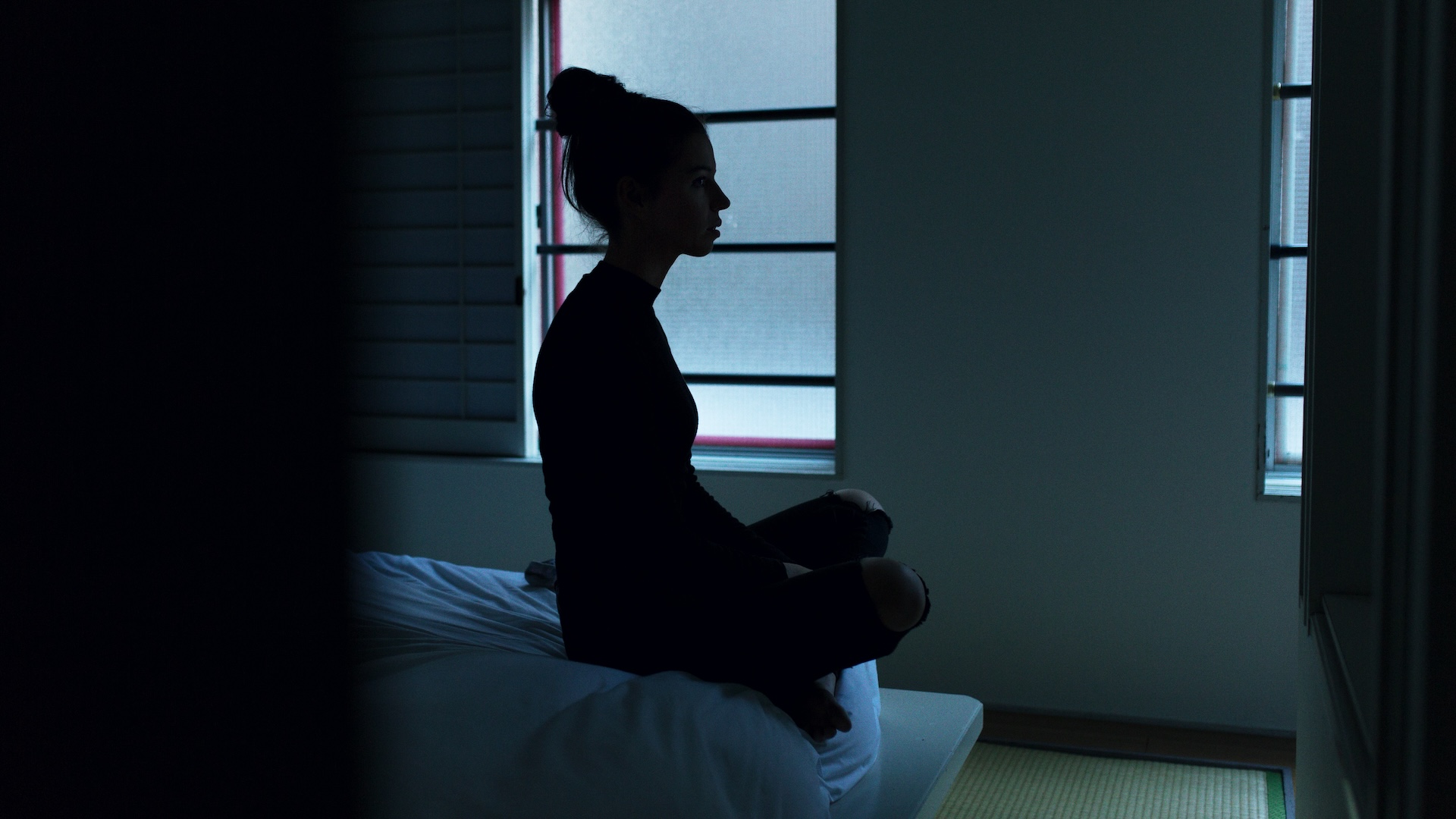
2 freaking AM. AGAIN. And I cannot go back to sleep.
Sound familiar? Now here's the real question: how many nights this week alone have you had that exact same fight with your ceiling?
If the answer is three or more nights a week, for the last three months, I have to be the bearer of bad news: you have insomnia. But let's be honest, you already knew that. You didn't stumble onto a sleep blog by accident at 2 AM. You're here because Google failed you and you're hoping I won't.
So let's actually talk about it.
What Is Insomnia, Really?
Let's keep this simple, no medical jargon, no 40-page manual.
The American Academy of Sleep Medicine (AASM) defines insomnia as:
- Difficulty falling asleep, staying asleep, or getting genuinely restful sleep
- Despite having adequate opportunity to sleep (this part matters, it rules out "I stayed up bingeing a show until 3 AM and now I'm tired," because that's not insomnia, that's a choice)
- Resulting in real daytime consequences: fatigue, irritability, brain fog, the whole miserable package
- Happening 3 or more nights a week, for more than 3 months
That last part is key. If you've had two rough weeks after a stressful presentation at work, that's not chronic insomnia, that's called being a human being under stress. We call that acute insomnia, and the good news is it usually resolves on its own once life calms back down. Chronic insomnia is the stubborn cousin who overstays its welcome and starts rearranging your furniture.
So, How Does Insomnia Actually Happen?
Here's the good news and bad news, delivered in one sentence: almost everyone will deal with insomnia symptoms at some point, but not everyone ends up with the chronic, life-hijacking version.
The difference comes down to a layer of vulnerability most people don't know they're carrying around. Sleep researchers explain this with something called the 3P Model, and once you understand it, insomnia stops feeling like a random, cruel mystery and starts making a lot more sense.
1. Predisposing Factors (the cards you were dealt)
These are the traits that were quietly present long before insomnia ever showed up: genetics, an anxious or high-strung temperament, a family history of sleep problems, or a history of chronic stress or trauma. Nobody chooses these. They just sit there in the background, doing nothing, for years. Maybe decades.
2. Precipitating Factors (the thing that lit the match)
This is the trigger. Divorce, a death in the family, a new baby, a big move, a medical diagnosis, a work crisis. Something stressful happens, and suddenly you're wide awake at 2 AM for the first time in years. This part is completely normal. Anyone with enough predisposing vulnerability would react the same way.
3. Perpetuating Factors (the plot twist nobody warns you about)
Here's the part that actually explains why insomnia sticks around long after the original problem is gone: the things we do to try to fix it. Going to bed absurdly early "just in case." Napping mid-afternoon. Checking the clock every time you wake up (as if staring at "3:47 AM" has ever once helped anyone fall back asleep). Lying in bed dreading the bed itself.
These behaviors feel like solutions in the moment. In reality, they're the reason insomnia becomes chronic. The original stressor can be long gone, and you'll still be up every night, because your brain has quietly learned a new, terrible lesson: bed equals frustration, not rest.
Manuela's Story
Manuela is a fictional composite created for illustration purposes. She is not a real client, and any resemblance to a real person is coincidental.
Manuela had always been "a light sleeper." As a kid, the smallest noise woke her up. In college, she was the one friend who could never nap on a road trip no matter how exhausted she was. Her mom was the same way, always awake before sunrise, always complaining about never getting real rest. It was just a family quirk. Nothing to worry about.
For years, it wasn't. Manuela slept a little lighter than everyone else, sure, but she slept. She held down a demanding job, had a social life, and never once thought of herself as "someone with a sleep problem."
Then, at 34, her marriage ended.
The weeks that followed were a blur of replayed arguments, half-drafted texts she'd never send, and staring at the ceiling running through every version of how things could've gone differently. For almost a month, she barely slept a full night. Which, honestly, made sense to everyone, her doctor included. Of course she wasn't sleeping. Her whole life had just been turned upside down.
Except three months later, the divorce was old news. New apartment, steady routine, even back out on the dating scene. On paper, life had stabilized.
Her sleep had not gotten the memo.
If anything, it got worse. She started going to bed at 9 PM, reasoning that more hours in bed meant more chances at sleep (spoiler: it did not). She napped most afternoons, running on fumes from the night before. She'd wake at 2 AM, immediately check the clock, do the grim math on how many hours she had left, and feel her heart rate spike right on cue. Some nights she dreaded the bed itself, a place that used to mean rest now felt like a battlefield she lost every single night. She started declining evening plans, just in case she needed to "save her energy" for sleep that never actually showed up.
A year after the divorce, Manuela wasn't grieving a marriage anymore. She was exhausted, isolated, and quietly convinced something inside her was permanently broken.
It wasn't. What happened to Manuela has a name, and it's a lot more common than people realize.
Breaking Down Manuela's 3 P's
Predisposing: Lifelong light sleep, a tendency to overthink, family history of sleep issues. Dormant for over three decades, causing zero problems on its own.
Precipitating: The divorce. A real, significant stressor that pushed her sleep past its breaking point. Completely normal, given her baseline vulnerability.
Perpetuating: Early bedtimes, afternoon naps, clock-watching, canceled plans, bedtime dread. These are what kept the insomnia alive long after the divorce itself stopped mattering. Her brain learned, through months of repetition, that the bed meant frustration, not rest.
The divorce didn't cause Manuela's chronic insomnia. It just opened the door. What kept her up a year later was everything she'd unknowingly done trying to fix it.
The Fix?
Cognitive Behavioral Therapy for Insomnia, better known as CBT-I, is what actually closes that door back up. It's the gold-standard, first-line treatment recommended over medication for chronic insomnia, and unlike a sleeping pill, its effects don't disappear the moment you stop treatment. We'll get into exactly how it works in the next post.
For now, if you've read this far and thought "okay but this is literally my life," that's not a coincidence, and it's not something you have to white-knuckle through alone.
🌙 Ready to Break the Perpetuating Cycle?
Your brain learned to be awake in bed. CBT-I unteaches it.
CBT-I addresses the 3P perpetuating factors keeping you awake at night. Our structured 8-session program gives you lasting, medication-free sleep. Telehealth sessions across Maryland in English and Spanish.
Schedule a Free CBT-I Consultation →References
- American Academy of Sleep Medicine. International Classification of Sleep Disorders, 3rd ed. Darien, IL: American Academy of Sleep Medicine; 2014.
- Spielman AJ, Caruso LS, Glovinsky PB. A behavioral perspective on insomnia treatment. Psychiatric Clinics of North America. 1987;10(4):541-553.
- Qaseem A, Kansagara D, Forciea MA, Cooke M, Denberg TD, for the Clinical Guidelines Committee of the American College of Physicians. Management of Chronic Insomnia Disorder in Adults: A Clinical Practice Guideline From the American College of Physicians. Annals of Internal Medicine. 2016;165(2):125-133.
