Insomnia and Mental Health During Postpartum Recovery and Early Parenthood
In my practice, I often meet parents who downplay their sleep difficulties because they see them as an inevitable part of raising a child. “I have a baby. Of course I’m not sleeping.”
But becoming a parent shouldn’t mean being resigned to insomnia. Although caregiving can shorten and interrupt sleep, not getting enough sleep and having insomnia are not the same thing.
That distinction matters for people who have given birth, as well as fathers, adoptive parents, and other caregivers.
Am I Missing the Opportunity to Sleep, or Am I Experiencing Insomnia?

Part of the distinction comes down to what happens when you have a genuine opportunity to rest.
- Insufficient or interrupted sleep: You need sleep, but caregiving responsibilities limit the time available or repeatedly wake you.
- Insomnia: You struggle to fall asleep or stay asleep despite having enough time and suitable conditions, and those difficulties affect your daytime functioning. NHLBI: Insomnia
For example, waking to feed your baby interrupts your sleep. Remaining awake after your baby settles, despite wanting to sleep, may indicate insomnia symptoms when it happens repeatedly.
Both experiences can occur together. One difficult night doesn’t establish a diagnosis, but you don’t have to accept months of difficulty as the price of caring for someone.
Caregiving Can Keep Us on Alert

Caring for a baby can keep us physically and mentally alert. Anticipating their needs and responding to their signals are part of caregiving. The difficulty arises when that alertness continues during opportunities to rest.
Worry about sleep itself can add another layer: “If I don’t fall asleep now, I won’t be able to function tomorrow.” Checking the clock and calculating how much time remains can increase that alertness. Worrying about sleep can then become another factor that maintains insomnia. NHLBI: Causes and Risk Factors
Your Mental Health Still Needs Sleep
Think about how you felt after a poor night’s sleep before your baby arrived. Perhaps you were irritable, tired, anxious, or less patient. Becoming a parent doesn’t erase your need for rest. New responsibilities, limited support, and, when applicable, recovery from childbirth can add to those difficulties.
Insomnia can also precede other mental health concerns. A meta-analysis published in Sleep Medicine Reviews found that insomnia was associated with a higher risk of developing depression and anxiety. That doesn’t mean either condition will necessarily develop, or that insomnia is the sole cause. The research was also not limited to the postpartum period. Hertenstein and colleagues, 2019
Postpartum psychosis requires a separate distinction. A study involving people with bipolar disorder found an association between sleep loss around childbirth and postpartum psychosis. That finding should not be generalized to everyone experiencing insomnia. Perry and colleagues, 2024
What Can I Do to Sleep Better?
- Protect opportunities to rest. If support is available, arrange specific caregiving shifts. If it isn’t, temporarily reduce nonessential tasks and ask your care team about community resources. No sleep technique can replace the time you need to sleep.
- Reduce clock-watching. Keep necessary alarms, but try not to turn every awakening into a countdown.
- Seek treatment if the difficulty persists. Cognitive Behavioral Therapy for Insomnia (CBT-I), recommended by the American Academy of Sleep Medicine, addresses the thoughts and behaviors that maintain insomnia. It goes beyond general sleep advice and should be adapted to your nighttime caregiving responsibilities and health needs. AASM, 2021
You don’t need to wait months to seek help when sleep difficulties are affecting your daily life.
Rest Can Become Possible Again
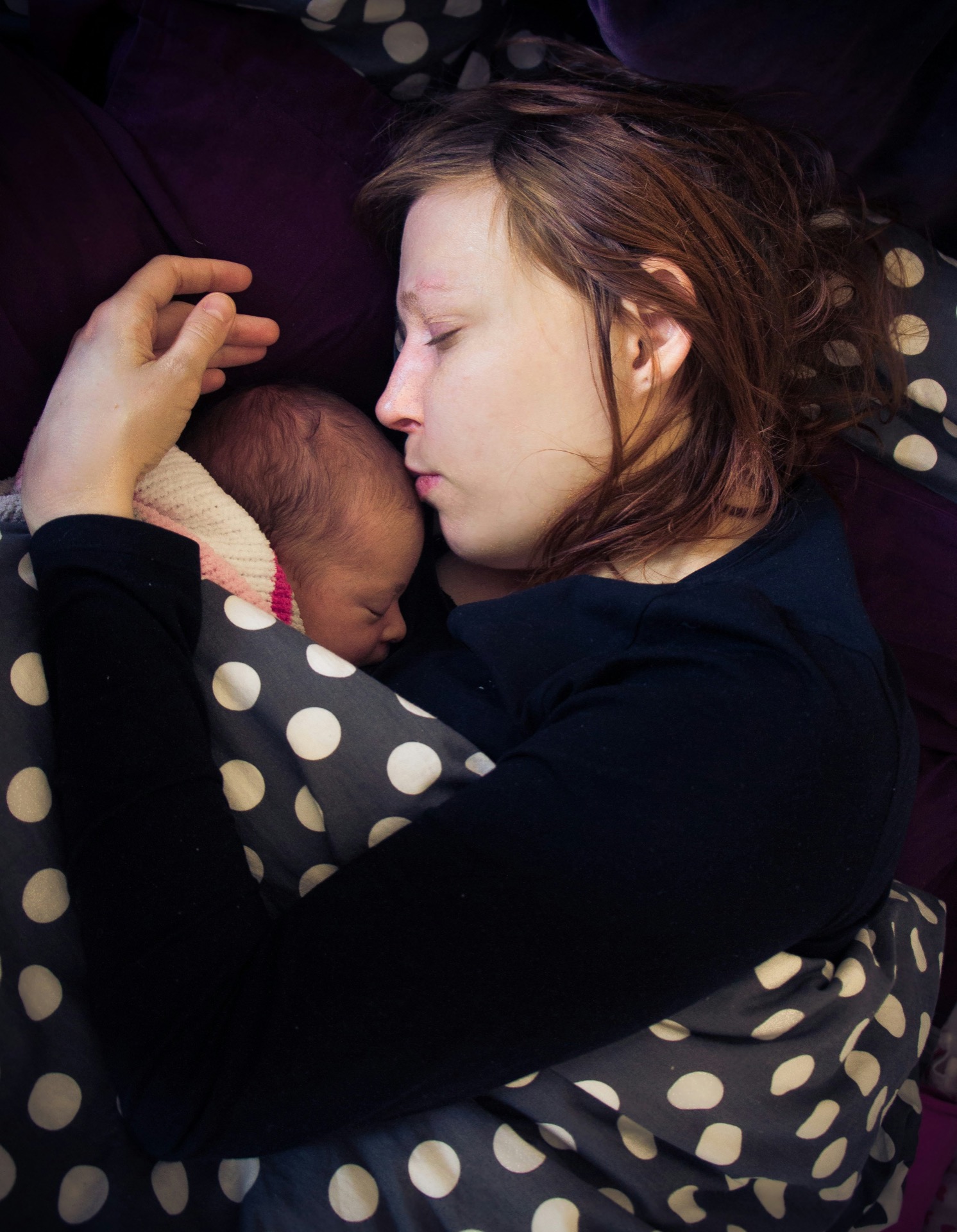
Struggling to sleep now doesn’t mean your nights will always feel this way. Insomnia is treatable, and you can begin addressing it while parenthood still involves nighttime awakenings and adjustments.
Rest may feel far away right now. There are ways to move toward it, with a plan that accounts for your health and your family’s circumstances. You deserve care, too.
